In large organizations, customization requests are frequently processed by different channels, resulting in fragmented information, tracking difficulties and unstructured communication between distributors and team members. This project was designed to centralize all requests in a single system, reducing errors, saving time and improving efficiency and collaboration.
Client:
BKT
My Role:
UX/UI Designer
Year:
2025
Service Provided:
Discovery, UX Design, Testing, UI Design, Design System
Problem
Currently, customization requests are processed by different channels with no integration between them. This way of working results in fragmented information, poor alignment and a partial view of the overall process. The absence of a centralized system makes it difficult to maintain consistency, tracking and control over ongoing activities.
In particular:
Requests are managed using different tools (email, direct messages, informal channels), creating confusion and alignment issues.
Recovering information and history takes time and is inconsistent.
Team members have difficulty collaborating in a structured way and monitoring the progress of activities.
The absence of a clear operational flow extends management time and the risk of communication errors.
These conditions not only have a negative impact on daily operations, but also limit the scalability and transparency of the process.
Goals
Design a digital solution that makes it possible to:
Centralize all requests in a single digital hub.
Normalize and track every request.
Save time and remove errors.
Improve communication and visibility between distributors and team members.
Secondary goals:
Reduce information dispersion.
Create a clear and intuitive experience that simplifies user tasks.
Automate parts of the process with structured rules and workflows.
Stakeholders
Distributors
They require frequent, contextual customizations and need a single, structured channel to submit requests, receive quick confirmations and track status. Currently, they face fragmentation and difficulty monitoring requests.
Owner
Each type of request has a specific owner who is responsible for managing the request. The owner functions as the main point of contact for all actions and updates related to the request.
Team Members
Supports the owner and can manage requests in their absence. Team members receive the request simultaneously with the owner, without requiring manual assignment, ensuring continuity, collaboration and efficient handling.
My Role
I led the end-to-end design of a centralized request management system using a user-centered, Agile approach, working closely with stakeholders and the technical team to quickly adapt solutions to evolving needs and feedback.
The process included:
Analysis of current workflows, communication channels and pain points to understand the fragmented request process.
Request requirements by meetings and interviews with team members and product manager.
Definition of user flows and information architecture to align with operational needs and simplify handoffs.
Wireframes and prototypes, used to validate solutions internally and guide iterations.
Design of the final interface and user interface components, with a focus on clarity, consistency and scalability.
Particular attention was focused on creating a clear, structured process and a foundation for a design systems, making all request management activities efficient, transparent, and traceable.
Solution
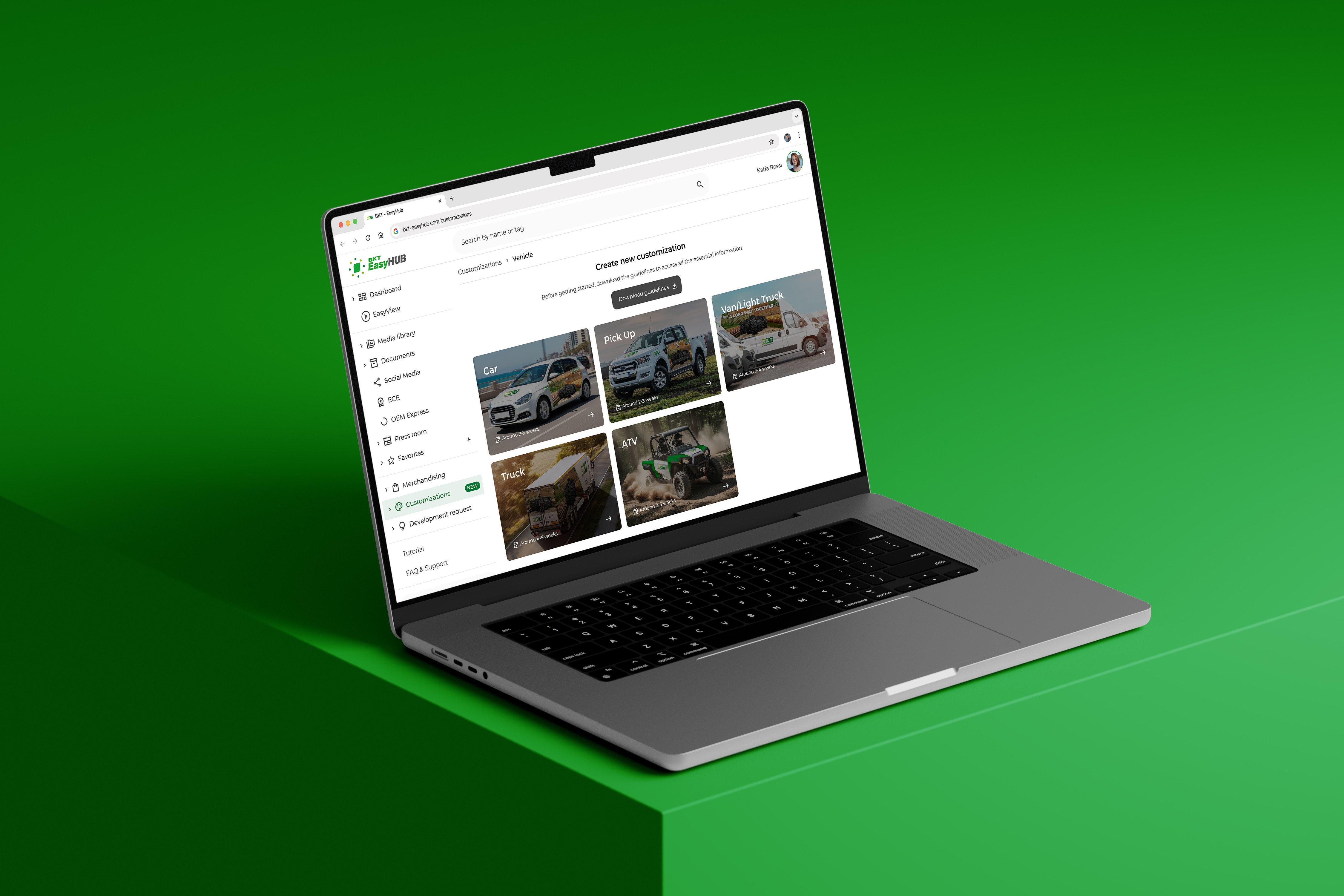
The vehicle customization workflow is part of a modular customization system that helps users efficiently submit, track and approve customization requests.
From a UX perspective:
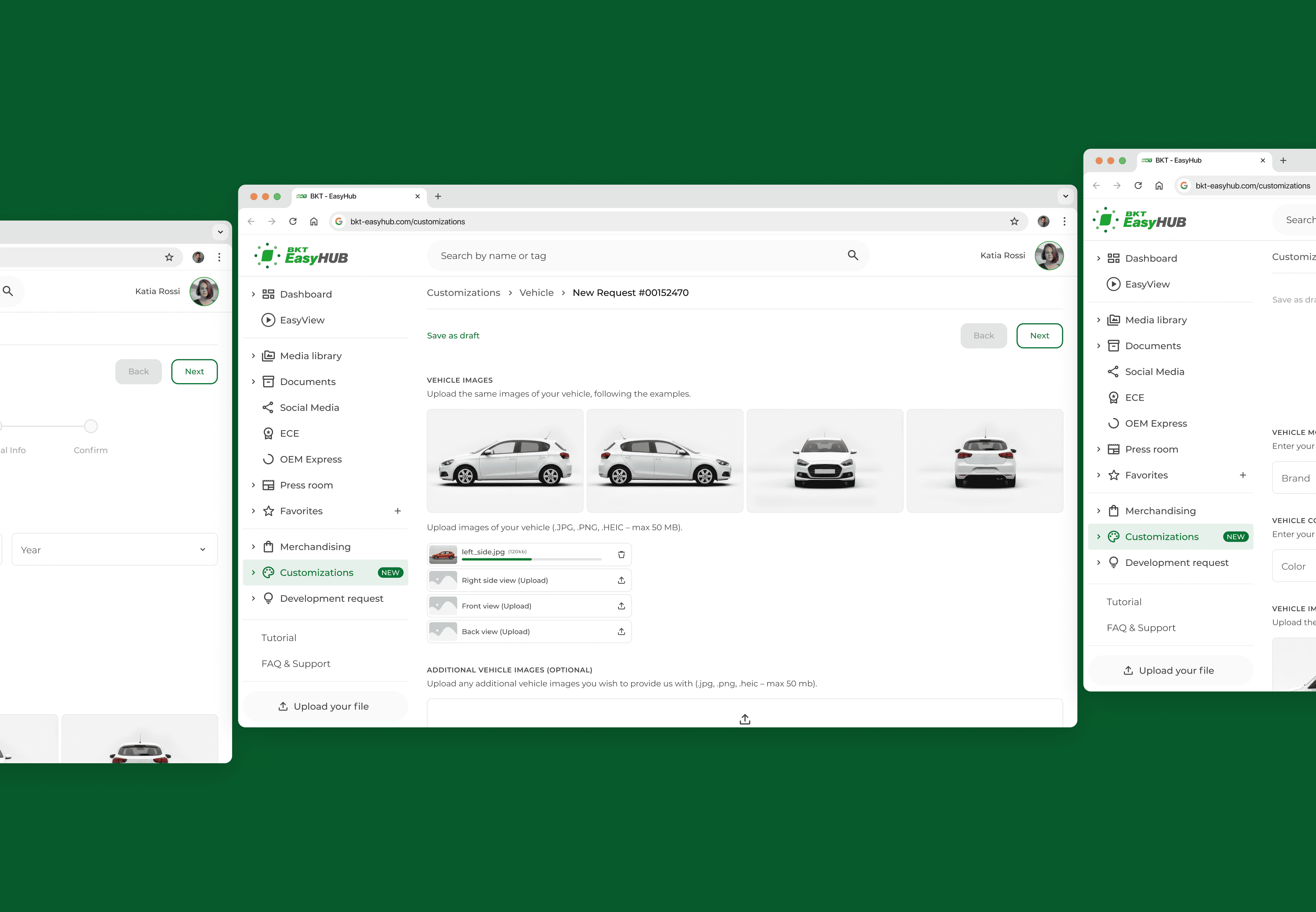
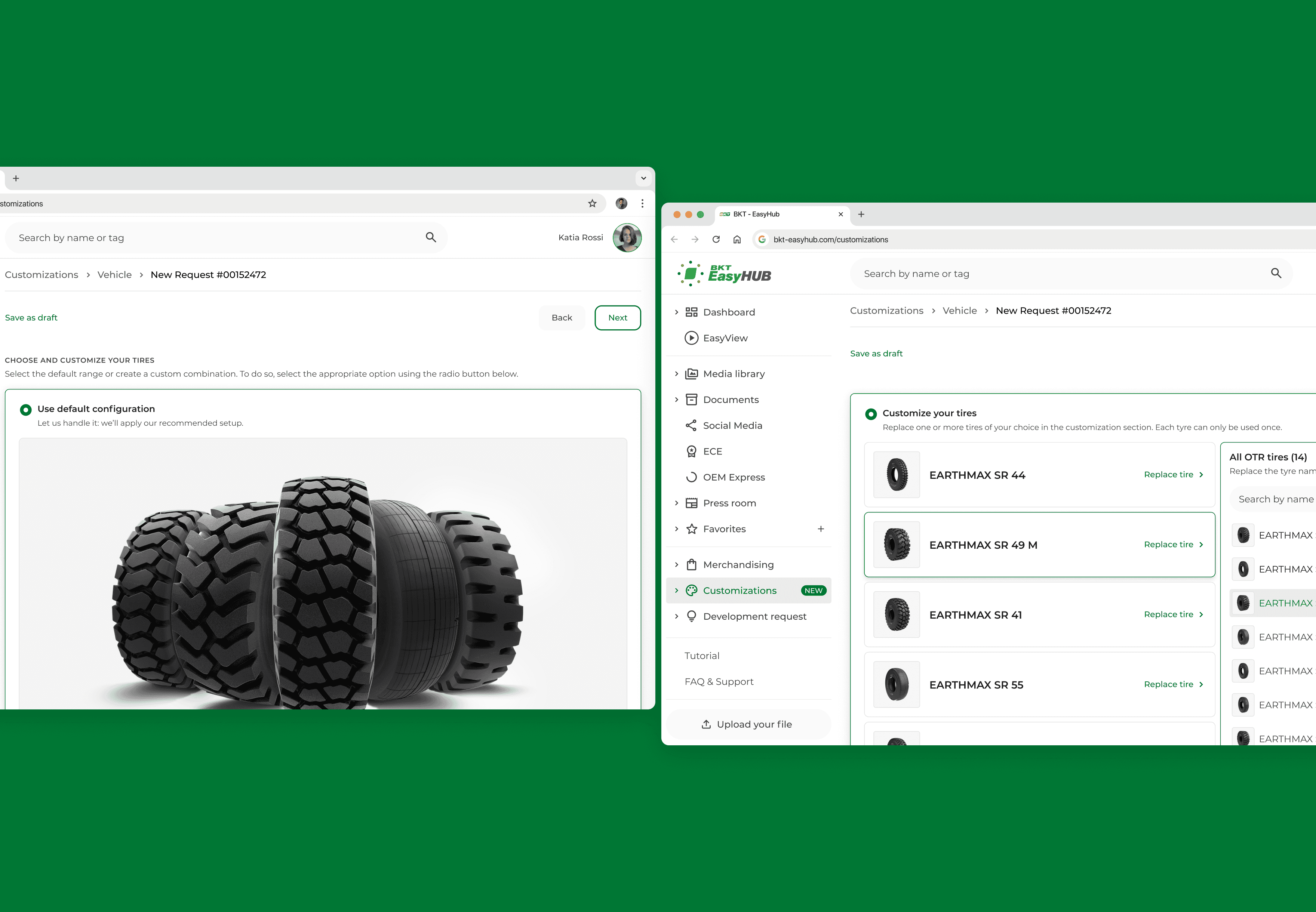
Guidelines to consult before submitting a new request. They contain all the resources you need to create customized designs in a consistent and structured workflow: vehicle data and images, reference ranges, selectable tyres, available backgrounds, vehicle sizes, distributor logos and additional information.
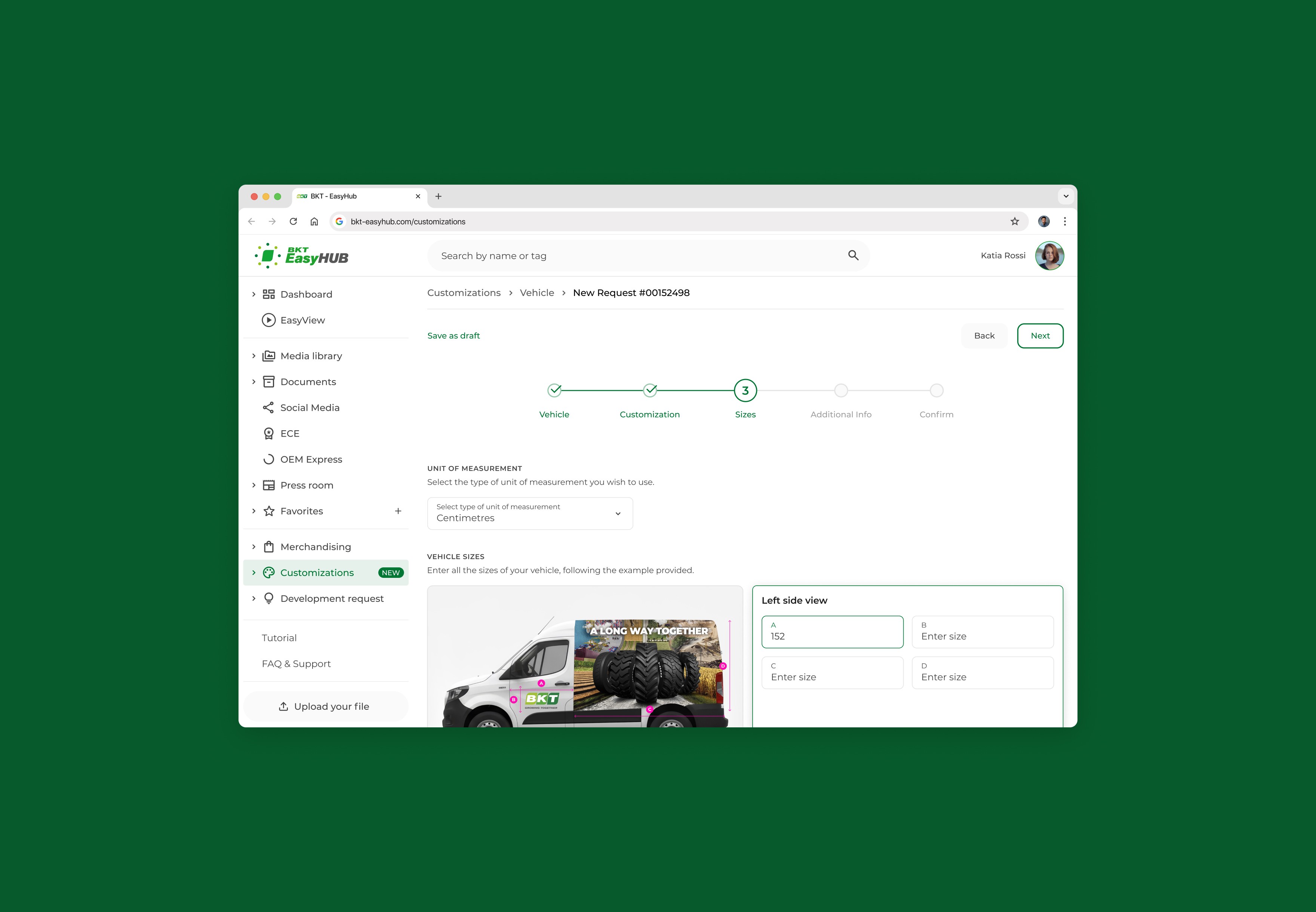
A step-by-step web form that guides users across the customization process and permits free navigation between steps. This flexible structure assists users in understanding all the required information and completing the request efficiently.
Draft mode permits you to enter only some information and complete the request at a later time.
Final summary with error reporting, showing missing fields or incomplete information before sending.
Temporary editing window for submitted requests, permitting users to review, correct, or complete information prior to processing.
Final file download with a defined time window for independent printing.
A guided and flexible experience that reduces cognitive load, errors and friction.
Cohesive and user-friendly interface with clarity, hierarchy and usability as priorities.
Role-based workflow with the owner managing the request, the team members preparing the proposal and the user approving or request changes.
Future Implementations
Design of additional customization flows in 2026 for store, printed material, adv, video and exhibition.
Addition of async chat to speed up communication between users and the internal team, especially for file changes and request details.
Possible extension of the system with advanced reporting and smart notifications to improve tracking and process efficiency.
Agile deployment and large-scale testing, with vehicle flow already implemented to enable real-world validation and iterative improvements based on user feedback and operational insights.
Special thanks to: Luciana
Next Project